Wednesday, 8 May 2019

Hog blog 16 - Croda is doing a great thing.

Gills hog blog number 16.
Tales from the palace

Thank you to Croda.
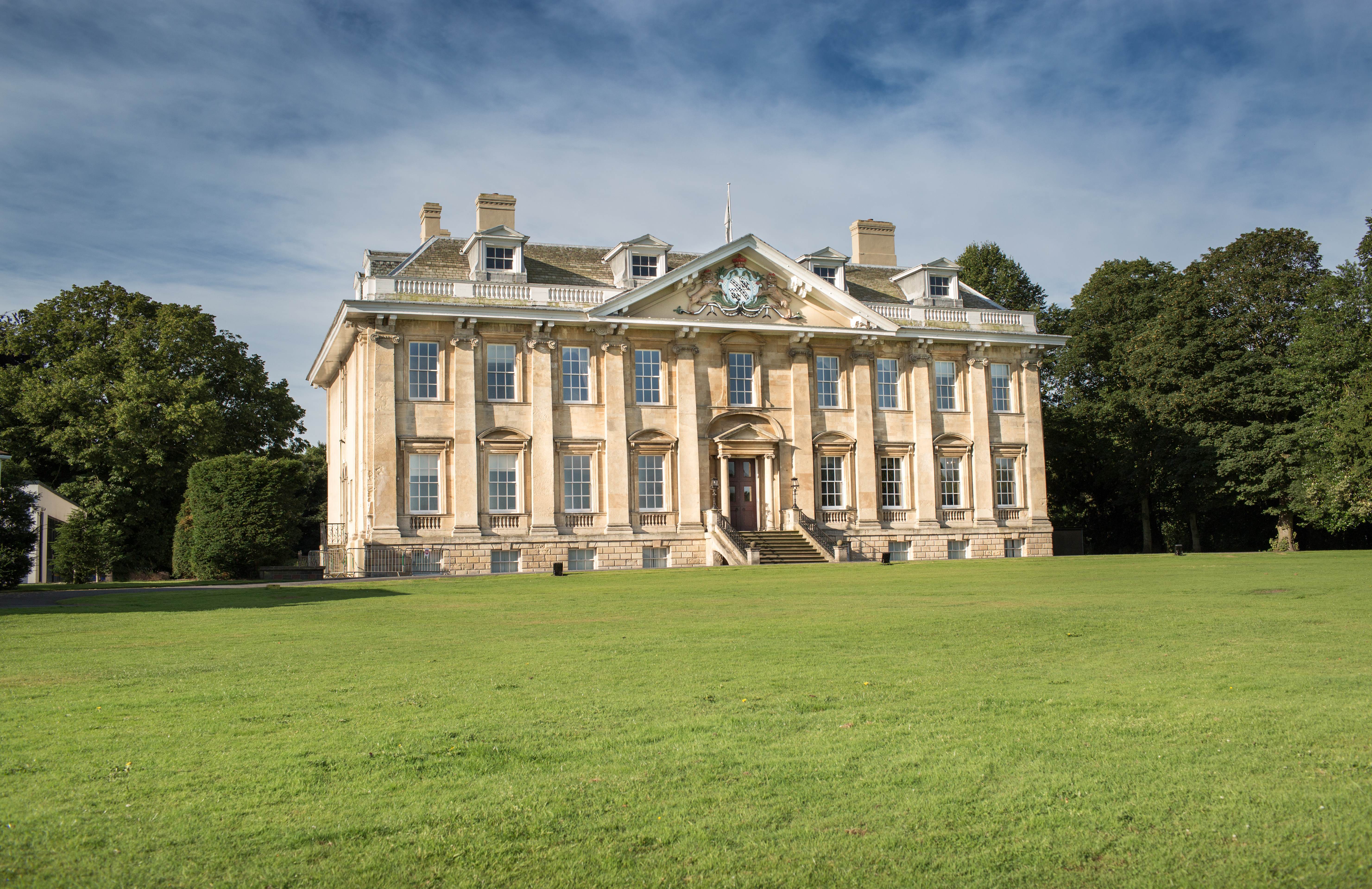

Many of you will be familiar with the beautiful global headquarters of Croda International PLC, which can be seen as you drive through Cowick. 
Croda's Headquarters, Cowick Hall, Yorkshire, UK

A stunning building fronted by beautifully manicured lawns offering an impressive welcome to visitors. The Hall actually stands in some 125 acres and what you can't see are the huge, unspoilt deciduous woodlands, ponds and scrub land behind the hall .

I was contacted by their UK sales manager recently who told me that the company are very keen to enhance biodiversity and were particularly keen to attract and support hedgehogs which are now very much endangered. He informed me that Croda is a local but multinational company with a strong environmental, and sustainability, ethos.  I accepted their offer of a walk around to see what they have done so far.
I met with the Estate Manager, Sarah Saxelby and was taken on a lovely tour of huge areas of unspoilt and untended land, full of fallen trees, leaves, shallow ponds and woods. Basically a  hedgehog paradise, which already supports a wonderful variety of flora and fauna. 
The Company's biodiversity team had already been in contact with the RSPB and a wildflower expert, amongst others and lots of feeding stations have been erected, along with extensive tree planting and natural wood chip walkways for staff members to enjoy. All areas of wilderness (some of which are fragmented from the main wilderness area) are connected by corridors of long grass, which is perfect for small mammals like hedgehogs to roam in their search for ground level invertebrates. Even better hedgehogs have been seen in the grounds which alleviated the fears I had re suitability.


I  was invited to give a presentation to staff who were keen to know what do if they find a sick hedgehog.  Staff members have already volunteered to patrol the grounds to look for potential hazards and to support feed the hedgehogs in times of hardship.

The first two hogs were released at the end of March and I beleive they will  have a wonderful life there. It will be the first of many releases I hope and the beginning of a wonderful wildlife partnership.

How lovely that a local Company has shown concern and pledged to do something meaningful and important to protect our native wildlife.

Hats off to Croda.


Rescue, Rehabilitate, Release.


Gill Dixon runs Pricklington Palace Hedgehog rescue here in Howden. Purely voluntarily and single handedly. Please visit  www.facebook.com/pricklingtonpalace/ to support her work. Donations via www.paypal.me/Dixon1829

Thursday, 4 April 2019

Hog blog 15. Love is in the air (or Spine Dates).


Gills hog blog 
Tales from the palace

Love is in the Air.

Spring really is in the air it seems and nature is busy. Hedgehogs are rousing from hibernation and at this time they really benefit from some food (meaty cat food or cat biscuits) to help them to build up the fat reserves they have lost during hibernation. Also a shallow dish of water as they are very thirsty when they first wake.

Hedgehogs do not mate in their first year of life but from year two they will do so  each year producing litters which should be  in late Spring and Autumn . Currently they seem to breed through out the year. 
If you have a feeding station (of course you do) you will hear lots of huffing and puffing and snorting as the males circle the females in an effort to attract their attention. This can be quite a protracted event and other males may be alerted and join in. Males head butt or ram each other and even occasionally fight. As you can imagine it's a tricky business for the male but a receptive female will lay her spines flat and adopt a specific position in order to avoid injury to the male. Mating's though, are often unsuccessful.


Once mating is over the male leaves and takes no part in rearing the young. 

Pregnancy last four and a half weeks and a litter of hoglets averages between four and five. Their lives are precarious and only two or three of these will make it to weaning from Mum at four to five weeks old . They will go out foraging with Mum from about three weeks of age and after about ten days of this activity (learning the ropes so to speak) they will wander off on their own. 

Please take care in your gardens at this time of year. Don't disturb potential nest sites  (under sheds, piles of leaves, old pallets) but if you do please call your nearest rescue for advice.   Help our prickly friends with some supplementary food (but NEVER cows milk).

Never touch hoglets or move them, as the mother will in all likelihood kill her young.


Gill Dixon runs Pricklington Palace Hedgehog rescue here in Howden. Purely voluntarily and single handedly. Please visit  www.facebook.com/pricklingtonpalace/ to support her work. Donations via www.paypal.me/Dixon1829


Monday, 4 March 2019

Hog blog number 14 Herbert the Hun.

Gills hog blog number 14.
Tales from the palace

The tale of Herbert (the Hun).

Herbert was brought to the palace one lunchtime having been found outside at a smallholding in Barmby on the Marsh. The finder was very concerned for him and on admission he looked thin but was rather alert and friendly (healthy hedgehogs should curl into a tight ball with the slightest provocation). Herbert was inquisitive and keen to look around and seemed completely calm and looked at me looking at him. The finder commented on his lovely demeanor but this was a poorly hog. This overt 'friendliness' is often a sign of liver fluke which causes a hog to be very active and rather 'sociable'. I have often been told how cute a hedgehog is when it displays these behaviours but in fact the activity is caused by pain. Liver fluke is deadly and once an egg is passed into the bile ducts there is no coming back for the animal. It is diagnosed by close examination of a faecal specimen under a microscope.

Herbert was settled onto a heat pad, offered food and water (he was not dehydrated so it was safe to offer food) and left to get used to his surroundings, and hopefully produce a specimen of poo.


A faecal sample revealed the dreaded fluke and a significant amount of roundworm eggs, both of which required treatment with different (rather toxic ) medications. I decided to treat the fluke first because it is the most deadly and treated the round worm the following morning.
Then I heard the cough!!! Lungworm has a very recognisable cough, rather like that heard in a chap who smokes 30 woodbine a day. I hadn't seen any lungworm larvae though and so I checked a further two samples..... there was the wiggly tell tale larvae and another treatment was required. Poor Herbert, no wonder he was feeling rough!
Lung worms have to be killed and then they are coughed up (rather gruesome) and the hog often requires antibiotic cover to remove the risk of secondary bacterial infection. Herbert started coughing as the drugs began their work. The medication is said to sting and I figure this is true as directly after the first dose Herbert sunk his teeth into my thumb in protest.
After that he began to hiss and spit as soon as I entered the palace in a rather 'keep away from me' fashion.
Unfortunately the treatments are not one offs and he had to receive a course of each (Lungworm requires six injections in total over two weeks).

I have never known an 'attack hog' before but Herbert turned into one. I put my hand into his hutch and he charged at it hissing loudly and jumping madly in an effort to scare me off. People don't often realise that hedgehogs can make a real noise when they feel under threat and I got the full works.

I soon learned that leather gauntlets were a reasonable precaution and the treatments were duly finished and Herbert ate well and gained weight and was deemed 'cured'.


When he was 930 grams in weight and cough free I decided that it was time to set him free. His hutch was at floor level and so it seemed easy to simply open the cage door and leave him to make a bid for freedom  when he was ready.
The following morning I returned to the hutch to clean it out ready for a new admission, but  there was Herbert curled up in his blankets fast asleep and snoring loudly.
The following night the hubster decided to put a camera up to ensure that he actually crossed the threshold of the door and indeed Herbert toddled out, explored a little, made for the cat hole in the door and ventured out four times for periods of up to an hour, and returned to his hutch at dawn. This continued, Herbert sometimes stays out foraging and exploring around the farm yard for up to three hours at a time, pops back for a snack and returns to his warm bed for the day.
I remember writing a blog (Number 10) which asked whether hedgehogs were intelligent or not and the answer seemed to be a resounding 'No'. Well herbert The Hun may not be intelligent but he definitely knows when he is onto a good thing.
It says something when my husband and I ask each other of an evening 'Have you let the hedgehog out' ???!!!!


Gill Dixon runs Pricklington Palace Hedgehog rescue here in Howden. Purely voluntarily and single handedly. Please visit  www.facebook.com/pricklingtonpalace/ to support her work. Donations via www.paypal.me/Dixon1829

Tuesday, 29 January 2019

For the love of Liberty

This is something of a different blog for me, but an important one.
On Sunday I had one of those 'meant to be' moments. Let me explain....
I have for sometime wanted to sponsor a child who was living in abject poverty in Africa (or wherever), but the many searches I have made have never really assured me that any money I donated really will help a particular child. Many areas of Africa for example are rife with corruption and fraud and exploitation and I did not want to fuel that in anyway.

Last year a friend told me of three children she was supporting via a community project in Uganda. She receives regular school reports and letters and made contact with the lady who runs the project via social media and felt very happy that it was what it purported to be. Even better, last week she and her husband shut up their house and flew out to this remote area in Uganda to visit the place themselves and meet the children that they are supporting and to see how best they can help this desperate community..

Two days into their visit they happened upon Liberty, who was curled up on a mat on the hard mud floor which is the place she has slept every night since being a baby. Her mother is mentally ill, her father is absent and her Grandmother does her best to look after them both.


Liberty is four years old. She has to walk for three kilometres to fetch filthy water from a well which is the only source of water in the area. There are no toilets or sanitation. She desperately needed a sponsor .

I contacted Doreen Kanyunyuzi, who is the lady who runs the community project often just to help people simply get the basics they need for survival. I asked how I could sponsor Liberty and what the cost would be.

I was aghast to find out that for £200 I can sponsor her education for a whole year, buy her uniform and shoes for the year and so importantly get her a mattress to sleep on. £4 a week could potentially give this little soul a path out of the poverty that the lottery of life of life threw her way. I didn't hesitate......

Within 12 hours the money was safely in Doreen's hand and my friend went along with her to tell the family the news. 
hey sobbed.

Sunday was the first anniversary of my Mums death. She is a woman who I miss immeasurably every single day and a woman who loved children and believed very strongly in kindness. She would have thoroughly approved of Liberty and I am so pleased, really thrilled to be able to do this in Mums memory.

If anyone reading this is moved to find out more or would like to help this project in any way (it does not have to be the commitment of sponsorship) please contact me for further information.


 If you are on Facebook you will find the project here 
https://www.facebook.com/www.careforthem.org/

Sunday, 27 January 2019

The man with tape on his face. (verbal dyspraxia and its impact)


My eldest sons speech was completely lost on everyone but me until he was nearly seven years old. I remember as a very small child in a montessori classroom a teacher was unable to understand him. She got down to his level and apologised and asked him to repeat what he said but again she was lost. On the third time of asking she shook her head and looked pleadingly at him and this little soul took her in his arms and hugged her, as if to say 'its' Ok, don't feel bad'. I knew right then and there that I was mum to an exceptional human being. I was right, but much of his brilliance is lost on those who do not appreciate the complexity of the difficulties he is living with. One of those difficulties is with speech and language.

Developmental Verbal Dyspraxia (DVD) is a contentious diagnosis but it is recognised as a condition and it is worth talking about. It is sometimes referred to as childhood apraxia of speech.


2.5 million people in the UK have speech, language or communication needs (SLCN) but DVD is a relatively  rare condition and it refers to difficulties in making and coordinating the precise movements (articulatory) required in the production of clear speech (P. Williams)  Children with DVD find it challenging to make speech sounds correctly and to join sounds together in words and sentences.
Oral dyspraxia on the other hand refers to the challenges in co coordinating the movements of the vocal tract (larynx, lips, tongue, palate), when not producing speech. Children with oral dyspraxia have challenges carrying out oral motor tasks such as blowing and licking. It would seem logical to think that if a child has verbal dyspraxia they must have oral dyspraxia too, but research suggests otherwise. Some children have both but not all. 

It may exist on its own or be diagnosed in conjunction with motor dyspraxia (and other possible co existing conditions).

Speech and language difficulties per se are the most common form of difficulty seen in schools, perhaps because we easily recognise when a child's speech is not developing as expected. In an ideal world it will diagnosed early and appropriate and intensive intervention will offer the chance of very meaningful improvement. Sadly though these difficulties are often met with a 'lets review in six months' approach and these are extremely important months in language development and subsequently in the acquisition of literacy.
If a child is lucky enough they will receive the appropriate help but then people think it has been corrected totally and forever. The truth is that as with motor dyspraxia this is a lifelong disability. Individuals just learn to cope with it better and adopt strategies to overcome the difficulties they experience.
My own son was not one of the lucky ones, therapy was a very rare resource and his therapeutic input came rather too late. He didn't learn to read until he was 16 years old!
It did allow humour though. We watched the 'terrible vision' and he jumped on the 'bouncealine'. His words were often so much more appropriate that those in the dictionary. I can remember at his school (which was for children with speech, language and communication disorders) being sincerely welcomed to the 'Harvest Testicle' service! 

In reality most people with dyspraxia (with or without a diagnosis of DVD) can have language issues because they process information more slowly than most other people and when they have a thought or idea, their memory issues mean that they have to get the idea out NOW often causing them to interrupt others or to speak  hurriedly and with an ever increasing volume. This is not intentional, just a manifestation of the difficulty being experienced.

It may be difficult for the individual to keep up with a conversation at speed, or to change topics rapidly. It may be that spoken language is reasonable (my son can talk the hind legs off a donkey), but receptive language is impaired meaning that the individual is not really understanding what it is being said to them. This can make them look like they are lacking in intelligence because it takes them so long to 'get' things. They are in fact not lacking in intelligence at all, just differently wired.


Observing my own son recently I watched him as he tried to follow and contribute to a conversation being held by people he knew and was comfortable with. When he interjected he stuttered and stumbled in his efforts to compose a meaningful sentence, and the other contributors often finished his sentences or tried to second guess his contribution rather than giving him the time to be part of the conversation. Eventually he fell silent, lost his place in the conversation and returned to playing a game on his tablet, and his isolation. He was excluded by people who had no idea that they had excluded him.
Joe once said to me It is no good just explaining something. I have to feel the words. A wonderful explanation of how it is for him.

I watch him as he says 'eh?' to everything that is said to him and whilst I completely understand that it is his way of giving himself a little more time to process things, even I find it irritating at times to constantly repeat everything I say.

He also indulges in a lot of verbal rehearsal, planning and mouthing what he hopes to say next. This means that he is no longer really listening to what is being said to him, and that he looks rather eccentric as he madly mouths away to himself as he is walking down the street or in a crowded room. He is also unable to enjoy free writing as he cannot get the words together to both make a meaningful sentence AND write them down. He adores the theatre (and comes alive on stage) but learning lines is ridiculously difficult for him.

I often consider that if I sometimes am irritated, the person who knows him better than I have a right to and who absolutely 'gets' dyspraxia/DCD and what it means to those who are living with it, how must it seem to others, those that are newly acquainted. What it usually means is that he rarely indulges in conversations with people of the same age as him as he tends to gravitate to those who are older and less demanding or much younger who have less expectations of him, or others with difficulties., and that condenses his world. Developmental verbal dyspraxia cannot be seen but is very disabling in the fast paced world in which we live. I guess a reasonable analogy for those without it is to drop them off in a foreign country where no one speaks their language and ask them to navigate their way through the day. It is tough, frustrating, embarrassing and oh so lonely.

Joe tells me that it is like living with tape on your face. It is for the rest of us to peel away that tape and give him and others like him their voice.

What we might do to help?


  • Give more time. Allow people to answer in an unrushed way. Perhaps use a bean bag or someone's wallet for the person who is speaking to hold until they have finished. Then pass it on.
  • Encourage them to be honest. 'Please give me more time to listen and answer, I have a speech difficulty'
  • Talk to them about something familiar or that they enjoy so they can feel comfortable.
  • Help them to organise and plan their responses.
  • Be compassionate.
  • Include them.
  • Use facial cues, visual prompts or body language to express yourself.
  • Business cards with essential information will save the person having to remember and verbalise routine data.
  • Be informed and help to raise awareness.


For further information please see...

www.ican.org.uk/help
www.talkingpoint.org.uk
www.dyspraxiafoundation.org.uk
Supporting children http://blog.optimus-education.com/supporting-sen-pupils-speech-and-language-difficulties-classroom-strategies-teachers-and-assistants
www.afasic.co.uk
Apps for speech and language can be found at  https://www.afasic.org.uk/resources/apps-for-speech-and-language/


Ref. Williams P. Developmental Verbal Dyspraxia (Dyspraxia Foundation Information sheet).

Wednesday, 23 January 2019

Barbed wire and barbie dolls. Neurodiversity and sensory overload.

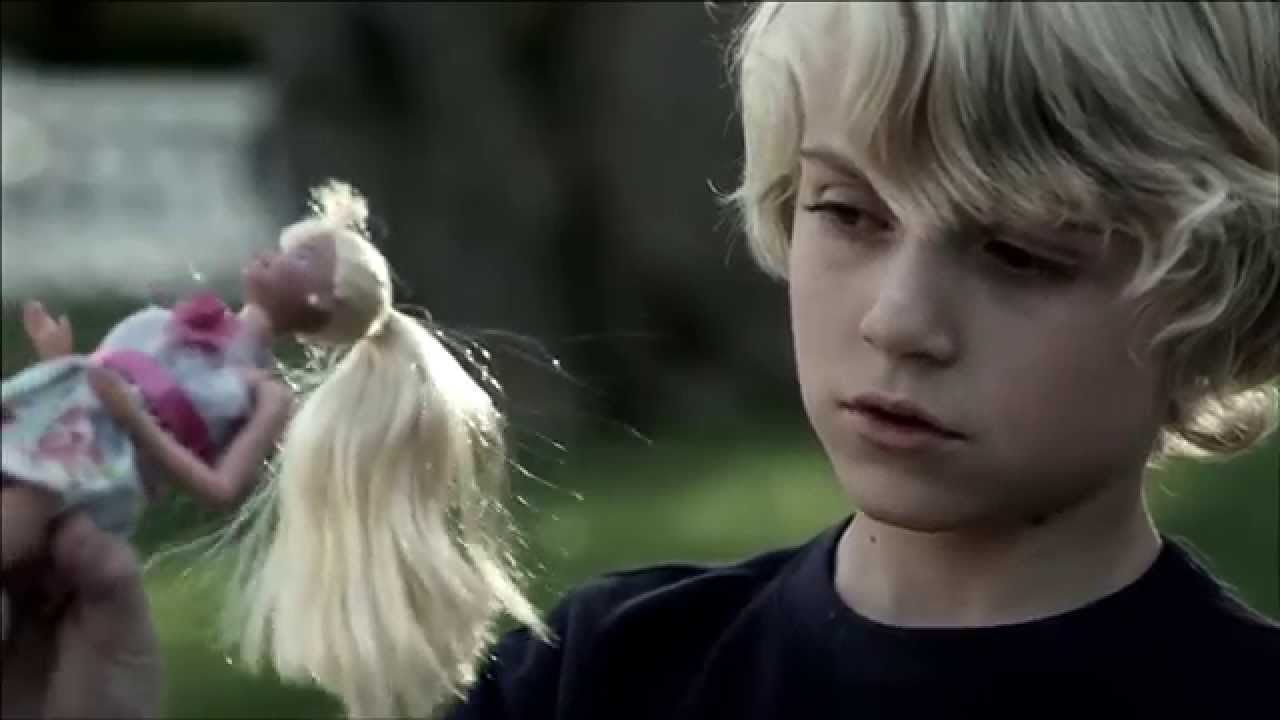
People with ASD, dyspraxia and other hidden disabilities often have quite intense sensory systems. It may be that they feel more dynamically, smell  with greater intensity, taste assiduously,hear more keenly and see more brightly. It may be that they require some form of sensory input to calm themselves. For my son as a child it was blue tac and barbie dolls. He played with the hair tirelessly in times of need and required blue tac to squeeze in order to fall asleep.
Image result for boy playing with barbie doll
mijo brands.

When he was at school he embarked on the ALERT (how does your engine run) programme and learned what he found energised him and what calmed him in times of over stimulation or distress. He was lucky to be somewhere with a full time Occupational Therapist who made it her business to explore this with each student. They were then each furnished with a bum back in which things such as therapy putty, stress balls, a small packet of raisins etc could be placed and used as needed and they were each given a code word which enabled them to leave a class and go outside to calm themselves as required. Such simple strategies which were absolutely lifesaving for him but also allowed for the smooth running of classrooms. People who fidget, bite their nails, twiddle with objects may be under aroused and those that avoid or run from situations may be over aroused.  Some may find light touch physically painful (like severe sunburn), or deep touch unbearable. Some may find haircuts and teeth brushing extremely distressing.We all have different thresholds of tolerance and these can change over time.

Sensory needs do not go away as people grow older. Some may diminish in intensity, some may be reduced by exposure and some may always impact the day and the individual needs to be able to access what helps them when they become distressed. They may stim *, wear headphones. use a stress ball, listen to music, push against a wall, chew gum. There are hundreds of different strategies which may assist different individuals. 

Sensory overload, is distressing and uncomfortable and anxiety provoking and is best avoided if at all [possible and it is for others to allow people to practice behaviours (within the parameters of acceptability) to enable that individual to remain calm and productive.

It is for parents to recognise the stressors, balloons popping at a party can be terrifying for some children, the many colourful displays that are in abundance in primary classrooms can be over stimulating and distracting, certain fabrics may feel like sandpaper against the skin, walking barefoot on some surfaces may be physically painful, looking someone in the eye may be extremely difficult, having different foodstuffs presented on one plate may induce nausea or the pungent smell of different food stuffs or different competing perfumes in the same small space simply overwhelming. A busy office may just be too much to bear whereas a quite corner in the same office may allow someone to be calm and productive.

There are things we can do to help. There are cushions for chairs,deep pressure lap blankets, twiddle pens, stress balls, movement, additional opportunity for breaks, study or work booths,  swivel chairs, big ball seats (which improve proprioceptive** and vestibular input#.) The list is endless.
Image result for ball seat

We need to let people explore different textures, positions and environments, so that they can learn their limits and be in control of how to balance them. In a classroom situation this to me is a basic kindness as well as necessary for learning. In an office or work place it is about allowing a person to be comfortable, productive and valued. Something that is important to each of us and something that is surely every persons right. So if you see a child wearing head phones, or coloured glasses, or an adult rocking or chewing or who refuses to enter the works canteen, they are not weird, they are simply individuals who have learned that some things are intolerable and have discovered a way to make them less so. The rest of us need to listen, to accept and to allow for those very reasonable adjustments which make the school or work day something that can be looked forward to rather than dreaded.

*Stimming is a repetitive body movement that self-stimulates one or more senses in a regulated manner. It is thought to give comforting/pleasurable feedback.
** Proprioception perception or awareness of the position and movement of the body.
# Vestibular The body's system of balance

Monday, 17 December 2018

Help it's Christmas!!!!!

Dyspraxia/DCD and Christmas.

Christmas is traditionally what people think of as a joyous, family orientated time of year, but for those with dyspraxia/DCD it can be very stressful indeed. Apologies to the adults with dyspraxia/DCD reading this but I write as a Mum and so this relates to children. Adults, I hope can avoid some things or make some choices about the way the day pans out.
Some children with dyspraxia/DCD love all the chaos but some really find it very anxiety provoking and this blog is written with them in mind..

Children with dyspraxia/DCD are rather at the mercy of family traditions and expectations but for someone who craves 'sameness' and who perceives the world in a different way, these expectations can simply be too much and if there is not some understanding and forward planning the day can turn from one full of joyous intentions to a stress filled nightmare.

Children with dyspraxia/DCD often have visual perceptual problems and this affects the sense they make of what they see (it answers the issues with heavy footedness, stumbling into familiar things, finding stairs problematic etc). 

At Christmas we may talk of Santa and how he visits the 'good' boys and girls. If your child is not receiving appropriate/adequate support at school then he will already assume that this message precludes him, as afterall he may have been repeatedly told that he is naughty, lazy and lacks concentration. Then we tell him that a complete stranger dressed in a red costume will enter his bedroom uninvited and he needs to be asleep. My son who has severe dyspraxia/DCD spent the entire night awake and upright as a small child  in complete fear of this visitation. One year I had absolutely no sleep at all on Christmas Eve and then had to prepare dinner for a houseful. It was miserable!  I was delighted when Santa was outed as we all got some sleep on Christmas Eve. How many photographs have we all seen of terrified  children being made to sit on Santas lap. It's a madness!!


Image result for scared of santa
(Facebook.com)
Christmas day starts with excited siblings, twinkling lights, brightly coloured wrapped objects and an air of expectation which may at best make no sense to the child with dyspraxia/DCD and at worst be completely terrifying.

The day continues with the ingestion of energy inducing sweets and treats, the banging of crackers, visitors to engage with and screams of joys, music, games and general mayhem. For the child who lives and learns differently it may be a nightmare scenario and we need to consider their needs in order to make the day successful for them, for you and for your family. It is both bad and sad to have to deal with meltdowns and the looks of disdain and disapproval that they often invite from others. It can make the day heavy with sorrow and everything that you didn't want it to be.

We as parents and /or carers need to give some consideration to the day before it arrives and to prepare our child with additional challenges for what it is likely to entail.


Tips for Christmas Calm.

Don't overstretch yourself. If it is your 'turn' to have all the family then let them know that you already have quite a lot to consider and so you will need their help. Don't be afraid to ask for help. Only participate in the things that will make you happy or that have special meaning. Don't feel obliged to do things because others think it is the right thing to do.

If you haven't got your shopping done yet, then don't take your child with you as you rush around getting things done. Shopping centres at Christmas are a sensory nightmare. Shopping online is much less problematic. 

Talk to your family and visitors about what Christmas may be like for your child and how they can help.

Talk to your child. If they beleive in Santa, let them know that he doesn't have to enter their bedroom. He can leave their presents with you. If your child thinks they have been bad, explain that no one can be good all the time and Santa understands that they find life more difficult than their siblings/friends.
Create a visual time table for your child. Map out what will happen and when so that they can cope better with the changes to routine. I know that there is a degree of sadness in removing all the spontaneity but it really does pay dividends. 
Image result for Christmas time table
(Twinkl)

Don't put all the decorations up on Christmas Eve for the children to wake up to. Introduce them over time. 
If you are going elsewhere for Christmas then pack a backpack with some favourite and familiar things in it. Ask the person who's house it is to prepare a quiet space that your child can retreat to if they need to and take some ear defenders if things are likely to get raucous. Have a Christmas free zone in your own house too.
Take turns to play games and spend time with your other children. Your child with additional needs can perhaps play on an Ipad while you do this or your partner could take them for a walk or read them a story.
Stagger the opening of presents and make them easier to open. Tons of sticky tape can be very difficult for someone with poor fine motor skills. It can be fun to wrap up a familiar or favourite toy.Too much all at once can be overwhelming.
Be aware of their sensory needs. Balloons or Christmas crackers may be an absolute disaster for some, others may find the excitement too much, or the flashing lights difficult to deal with. Visitors may like to hold off from wearing too much perfume which can be difficult for some. 
Give your child some jobs that they can focus on. Perhaps they can take coats or wander around with nibbles for people.
If you are cooking dinner then buy some ready prepared things. No one needs to know and it will save you time and stress.
Remember to be kind to yourself. You are giving extra all the time and Christmas should be fun for you too. Don't rise to any criticism that comes your way from people who 'know' how to parent your child better than you do.

Remember that the best surprise for a child with dyspraxia/DCD may well be no surprise and that is fine.   Go with it and make the day calmer, happier and more successful for everyone.


For further information re dyspraxia/DCD please visit www.dyspraxiafoundation.org.uk