Saturday, 3 March 2018

Gills Hog Blog 

A little Hog History.

I have recently read a fascinating book written by the late great Les Stocker, founder of St Tiggywinkles (the first wildlife teaching hospital in Europe).  I thank him for sharing  what he knew so enthusiastically and for everything he and his team did and continue to do for hedgehogs.

The hedgehog has a chequered history, and it is really a marvel that it has survived at all. Many were eaten by the ancient britons, and certain parts of the animal were considered to be excellent cures for various ailments and so they were widely hunted. Konrad of Megenberg told how hedgehog flesh was good for the stomach as long ago as 1350.

The Romans used the skins (dried and cured) to card out wool, but more recently the skins were used to prod horses over show jumps.

There were those who were keen to study rather than expolit and Aristotle in the fourth century BC observed and wrote of the 'echinus'.
He along with Albert the Great (13th century) spoke of how the movements of the hedgehog could be used to determine wind direction. 
The Romans also considered the hog useful in the forecasting of weather and wrote that the hog would exit from hibernation on Feb 2nd and if he saw his shadow he would return to his burrow for another six weeks of winter.
A well known story by Pliner the Elder told of hedgehogs who climbed trees in order to knock off the fruit which it would then throw itself upon in order that the fruit stuck to its spines for transportation. Quite an imagination!
(circa 1320 Cambridge)


In medieval Britain it was believed that hedgehogs suckled the milk of cows and this led to the  creatures being slaughtered in their thousands. Farmers persecuted them and in 1566 an Act of Parliament offered a reward for every hedgehog caught. Hedgehog hunting became quite a lucrative pass time.

The Bard himself, William Shakespeare spoke of them as wicked spirits and vermin and soon the whole world began to despise them.

Even the Church offered rewards for hedgehogs killed in churchyards and right up until in the last century some counties in England were still paying out for the corpses. 
It took another Act of Parliament in 1863 to repeal the law but goodness knows how many creatures perished  before this.
Sadly the hedgehog was then accused of egg stealing  and gamekeepers seized the opportunity to clear more from their estates . As recently as 1976  a scientific research programme established that in one estate in East Anglia, 260 hedgehogs a year were routinely slaughtered.


Thank goodness then for  Beatrix Potter who introduced a whole generation of us to the delightful Mrs Tiggy-Winkle . She is considered extremely important for bringing the hedgehog back into favour. 
That and the reignited interest of the natural word brought about by the horrors of war,led to the insignificant hedgehog becoming a banner of the new caring society and it adorned a whole range of stamps in Europe.

With all this positive exposure the much maligned hedgehog gained a popular image and they are now a much loved creature, but one that is in rapid decline. Numbers have declined from an estimated 30 m in the 1950's to 1.5 million today.

It is interesting to note that whilst they are now considered an endangered species  they only benefit from partial protection under the Wildlife & Countryside Act (1981).

It would seem to me that our only indigenous spiky mammal, which we know for certain  were firmly established in Britain by the middle Pleistocene period about 2 million years ago have earned their place on our shores.
I certainly hope that they will not be assigned to the history looks but sadly current research indicates that it is a very likely scenario. The fate of the hedgehog is in our hands. and with Spring around the corner I would urge you to resist the temptation to use weed killers in your garden and give the hedgehog chance to clear your space of those pesky plant eating insects. Lets keep them out of the history books.


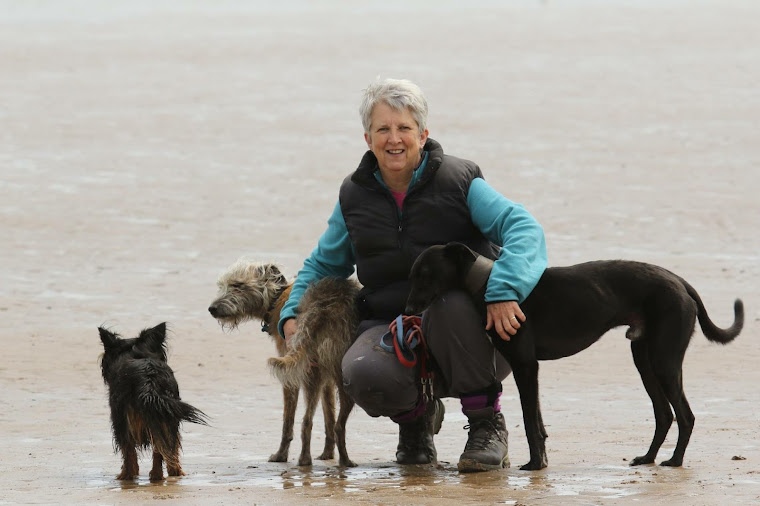
Gill, until recently, ran a very busy and successful rescue. she now concentrates on raising awareness in an effort to help this endangered and very precious little mammal.


Wednesday, 10 January 2018

Gills Hog blog number 1


A post from the Palace (or Gills Hog blog number 1).


In September 2017 I decided to open a hedgehog rescue centre in response to local need. This was not on a whim and I am not a mad hedgehog lady. I have been rescuing various animals for most of my life. As a child our house was rather like the Durrells with all manner of creatures walking, flying, trotting and swimming around it. I can remember as a small child having a full  funeral ceremony for a dead hedgehog, insisting my parents sang hymns as we buried it. My Dad even had to return a live lobster (given for tea as a rare treat )to the ocean in order to stop my sister crying! I have never had a moment that wasn't shared with some beautiful creature and animals are an extremely important part of my being. I currently live on a smallholding just outside Howden, East Yorkshire with many furry and feathered friends  (around 60 in number). I also have a medical background and so wounds, maggots, and faeces cause me no concern. A hedgehog sanctuary seemed a way of formalising and hopefully funding a worthwhile venture.

My (long suffering) husband set about creating a suitable centre in an outbuilding and 'Pricklington Palace' was born with the help of many wonderful donations from friends and family, and the essential support of my local veterinary practice.


I decided that six 'beds' would be enough with all my other commitments. That has grown to 13 now and since that first day some 80 hogs have passed through its doors. I have recruited a few wonderful foster carers who take well hogs for TLC when their treatments have finished. I have an intensive care incubator and research microscope which I have been able to purchase via crowdfunding and donations and which are absolute life savers. It is though a 365 days a year commitment, in all weathers and no matter how I am feeling, and I am running it purely voluntarily with only voluntary contributions to rely on.


My aim is to admit, treat and release as quickly as possible, but of course I now have a hogspital full of those who were just too small to release before the winter cut off. My current 9 guests are enjoying 5* accommodation in heated hutches and a varied menu until the eagerly anticipated spring release. I have identified and treated all manner of intestinal worms, ringworm and mange, strimmer injuries and amputations and have painstakingly removed thousands of maggots and countless ticks. I have syringe fed, injected, coaxed and coerced in order to get the necessary treatment onboard a needy hog. I am a member of a wonderful online group of rescuers who share knowledge, experience and advice and commiserate and congratulate in equal measure.

Hedgehogs are up against so much and whilst they are endangered they are not a protected species. The greatest threat is probably the huge reduction in invertebrate numbers and whilst they prefer beetles and caterpillars as food they have had to turn more and more to those creatures who host all number of parasites which can prove deadly to hedgehogs. Lack of suitable food, pesticides and slug pellets, the increase in road traffic, domestic dog attacks and various other threats have led to a state of emergency for our prickly friends and we are at a very real risk of losing them forever if we do not act to preserve their habitat and allow them the opportunity to thrive.

Hedgehogs are very cute...


....but they are wild animals and do not enjoy human contact or intervention and so I keep my contact to a minimum and disturb them only when necessary. They are very fussy eaters and each has a preferred diet which I learn by a process of (sometimes wasteful) elimination. I haven't been able to save them all, but even those that have died have done so in a warm and comfortable environment, free from predators or pain. It is a though wonderful feeling to take something very sick and fragile and treat it successfully and release it back to the wild.

My top 5 tips to others would be...

  • If you find a hedgehog out it daylight it needs help (unless it is a nursing Mum who will be looking well and moving with purpose).
  • Keep the hog warm and offer a small amount of food and fresh water. Make sure it has a towel or something to bury in which will reduce stress enormously.
  • Take any sick hedgehog to a vet or rescue centre for a health assessment. They can look well but be harbouring potentially deadly parasites that need to be treated as soon as possible.
  • Make a simple hedgehog feeding station and feed them with meaty cat/dog food or dry biscuits and fresh water (never milk or bread which will kill them) https://thehedgehog.co.uk/feeding-hedgehogs/how-to-stop-cats-dogs-and-foxes-stealing-the-hedgehogs-food/
  • Ensure that they can enter and exit your garden (and garden ponds) with ease.
If you would like to support my work, sponsor a hog or donate an item please visit and join my page on Facebook at https://www.facebook.com/pricklingtonpalace/
You can donate via PayPal at https://www.paypal.me/Dixon1829  or can buy an item from my Amazon wish list.

Our prickly friends really need the help. 


Monday, 29 May 2017

Team Intrepid but decrepit and the Way of the Roses.


Well it seemed a good idea for two sisters to plan a coast to coast cycle challenge on New Years Eve, having drunk copious amounts of alcohol . 
After all these things are talked about but never come off......
Then Liz (the fit one in the centre) jumped aboard and it became all the more real.
So a few months of 'training'  and on May 22nd 2017 we set off to conquer the beautiful Way of the Roses.
Three women of a certain age calling themselves Team Intrepid but Decrepit raising money in memory of Gill's nephew, Adrian who took his own life in November last year, aged just 33 years.We knew that some ultra fit people have done the route in a day but we decided sensibly to take four and enjoy the views with frequent breaks and make it a bit of a holiday with a difference.  Our first long cycle tour.

The team.

  • Gill. (right in pic)...role...medic and accommodation organiser. Road bike.
  • Liz (the fit one)...role.... bike mechanic and route finder. Tourer.
  • Chrissie (left in pc)...role...route finder and seeker of sustenance. Hybrid.


Image result for way of the roses route

Day 1
Having had a peaceful and very comfy night at the Berkeley B&B in Morecambe, and with a good breakfast on board we set off for Settle. A warm, dry day to be thankful for. We knew this would be  a reasonably hilly start (Gill had yet to tackle a hill) and so we organised a shortish route of 35 miles which we managed in a fresh faced and enthusiastic way. It was great, if tiring in the heat but that beer when we had finished the days ride was like nectar especially as it was garnished with a great sense of achievement.  We then made the mistake of going to look at the hill out of Settle..... 


Day 2
THAT hill out of Settle. It is no laughing matter.  The hill is a 16-20%gradient which climbs 1000ft over 1.5 miles out of the town ...it was not a good idea to start the day with tired legs, no warm up or run up, cobbles to start and then a steep ascent. On reflection we should have included it in the first day and headed for Cracoe for our overnight stop. Liz, all but made it, Chrissie had a good old go but then a bad gear change stuffed her attempt. I really tried but ended up pushing the bike up some of it which was also bloody hard work on a very hot day. This was a tough day all round although the views were stunning. I did really struggle at times.  Chrissie and Liz's hill training back in Portsmouth paid off for them. The descents were of course wonderful but there was hill after hill and I was ready to give up at one point except there was no choice but to continue on the route. Greenhow Hill is another b*****d although we were headed in the 'kinder' direction.  A long, very steep and winding descent with tight turns around bends (make sure that your brakes are working well). 
With each hill Liz, winched her way up in a very low gear  with some sheer strength and determination.,Chrissie chanted 'my head is strong, my legs are strong' and just got to the top every time in her own way, like a traction engine. I chanted 'I hate hills, I hate hills and wish I had done some hill training.' 
Here I am at the top of Settle Hill...

Day 3...
A wonderful overnight stay at Boxtree Cottages in Ripon really set us up well for the day ahead.  The route heads for Pocklington via York and Stamford Bridge and we decided to hole up at my place near Howden overnight and so we ended up riding 75 miles today.  It was good riding though. Some 'undulations' were described (these are hills but softer ones) but on the whole this was a lovely day. Hot and sunny again. We stopped in York for a sarnie and enjoyed the cycle path out of the City. We were pleased to get to mine for a much needed meal and shower. I had really got to know my bike by now, my gear changes (and anticipation of what was needed) was much improved and my legs stronger than ever, if a little stiff. Interesting that I sailed through this day (compared to others that is) on the flat (which is absolutely what I am used to) whereas Chrissie and Liz found the lack of positional changes offered by a varied terrain caused their shoulders to ache somewhat.

Day 4...
Back to Pocklington from mine plus a few add ons gave us something in the realm of 66 miles today. Bridlington via Driffield and some of the beautiful surrounding villages. A few sneaky ascents today (Millington Hill is one to note, hard work in the heat) through the beautiful wolds and some glorious scenery to take in. Another great day's riding. 

A much kinder day with the scent of the finishing point in our nostrils. To arrive in Bridlington and know that we had achieved what we had set out to do was just fantastic. 
A  very welcome cup of tea at the Bluebell Guest House on our arrival and fish and chips at the harbour to end our day.

Team Intrepid but Decrepit nailed it!!! Now just the 60 miles home to pedal.........

Tips......
  • Pack light. Your baggage really affects your ride. You need less than you think.
  • Add SIS tablets in your water bottle especially if it's hot. They really helped to reduce fatigue.
  • Do some training. This route is described as moderate in difficulty. There are some really challenging hills.
  • Take a map if like us you were unsupported.
  • Take breaks and be aware of each other.
  • Remember those stretches at the end of the day.

A few thankyous to...

  • My brilliant team mates.It's been a pleasure.
  • The weather...glorious sunshine all the way.
  • Sustrans for a really lovely and on the whole very well signed route.
  • My bike (christened Alex en route) who I now know a whole lot better.
  • The supporters who raised all the money. You are priceless (over £2,000 to C.A.L.M.).
  • The man who ran out of Wetherspoons in Ripon to give us a tenner and the lady who emptied her purse while we were having a sarnie somewhere. Touching.
  • Our partners for the cheers and support..
  • My legs
If you are thinking of having a go. my advice is to DO IT!!!!!


Sunday, 26 February 2017

Thanks for the memory. My 'take' on Alzheimer's.


I read a fair few posts about the horrors of Alzheimers disease/Dementia and most of them seem to imply that the person with this condition assumes a babbling, pitiful state that no one should have to endure.
I want to 'put the record' straight from my perspective. Yes aAlzheimer's is  a terminal health condition. It affects the most important of our organs (the brain) and its impact can indeed be devastating but it does affect each individual differently. It is wrong to put  all those with the condition in the same pot labelled 'babbling idiot'. They are not. In essence they are still the person they always were, but one has to dig a little deeper to find them and to try to view the world from their perspective. Like life in reverse if you like. As our children grow and learn and their cognitive function improves, those with dementia shrink and their cognitive functions diminish.

I have observed and loved both my parents through this condition.

My  late father Doug, was a proud, handsome, arrogant, clever,  man with an enquiring mind and a sharp wit. He was used to being in charge, was strict but usually fair, and rather emotionally constipated, in that he found it hard to express affection/love (like many of is generation I would guess). When he first began to lose his memory he was angry and frustrated by what was happening to his brain. In his last year he found being cared for extremely difficult, tortured by his loss of liberty and he became angry and sometimes aggressive as a consequence. I beleive he always had a temper which he kept very well under control, but dementia seems to strip people of the finesse of  the social dishonesty that many of us have to live by, lay them open and his temper became more apparent.
He did though became more affectionate and told me that he loved me so many times in his last years (something I never remember hearing as a child).

The condition took his life eventually. In truth he slowly starved to death, forgetting or refusing to eat and becoming smaller and smaller. Not a spectator sport and I was very anguished by his demise, because I knew the man he was.

My dear Mum is quite different. She is now in the latter stages of the condition. A good, warm, loving woman who spent her entire life looking after others and has accepted being cared for far more willingly. She likes the banter and having been quite buttoned up in life  (I never once heard her swear) she became funny, outrageous and very rude in an extremely comical way. It's not often one hears ones Mum singing 'While Shepherds washed their cocks by night' at the Christmas carol concert!!!

I have spent some of the happiest and most meaningful times with her SINCE she was diagnosed, knowing that every day is precious as I watch her lose so much of herself. However she is largely content and even though her speech is very disordered and largely incoherent we continue to have some wonderful conversations and laugh out loud moments. Yes she is incontinent and can no longer feed herself but she is not aware of that, it does not haunt her.

Don't get me wrong some days I could (and do) sob.  She can be difficult and surprisingly strong when essential care is being given, but she is genuinely delightful and I am very lucky to have had her in my life for so long. She too eats less and less and is shrinking before my eyes.

Of course I would prefer that neither of my parents had succumbed to a mixed dementia, but they did. It  is a condition that will affect most of us in some shape or form as people live longer, but what I am trying to say is that whilst there are times of real gut wrenching sadness and anguish, these can be and often are tempered with moments of real wonder and delight. I never felt I have lost my parents to the disease.

It is the hand that they were dealt and with kindness and a genuine regard for the person that dementia has shaped they are not less; just different.
With or without dementia they are the parents that I love, still worthy of  respect and kindness  and still able to experience moments of real joy.
,

Monday, 30 January 2017

The girl who forgot how to read.


The Girl who Forgot how to Read.

Recently I was chatting with a lovely young adult, who as well as having a severe form of dyspraxia/DCD (Developmental Coordination Disorder) also has severe dyscalculia.

Dyscalculia = is a difficulty in the learning or comprehension of arithmetic, such as difficulty understanding and manipulating  numbers, and learning mathematics.


People usually think of challenges with maths in terms of learning in the classroom; however, if an individual has dyscalculia the ramifications of this extend across many other areas which are significant for daily living. These include money and budgeting, time keeping and organisation, understanding weight and measurement. This can have a profound influence on job opportunity and retention.

The chat with this delightful individual exposed the fact that she experiences a sense of profound panic when it comes to dealing with money because numbers have no meaning for her.
She has recently moved out of home into a wonderful supported environment where the staff are trying to help her towards greater independence and a degree of independent financial decision making. Dyscalculia is one difficulty amongst a complex profile of specific learning difficulties, which as a bundle makes daily living very challenging indeed for this person.

It had been agreed that to make things as easy as possible whilst she gets used to all the change she is encountering that staff would work out with her what monies she would need to see her through the week, to pay for various activities and refreshments. To ease things further she agreed to her monies being given to her each day so she had only to consider one day at a time.

However it came to the  attention of her key worker that she was secreting money away to collect it up so that she always had a bundle of money on her person 'just incase'.
Further conversation exposed the fact that when she bought her lunch,  the numbers on the menu were meaningless. She was unable to calculate if £4.95 was less than the £8 she had to spend, she felt a sense of terrible panic. She was terrified that she would not be able to pay for what she had ordered. She thought that she would look utterly stupid and people would not understand that she was unable to interpret numerical information.

So what has this got to do with forgetting how to read?

I was reminded of a story of a child who went overseas on holiday with her family. When she arrived at her destination she exclaimed 'Mummy I have forgotten how to read!!!'. What she didn't know was that all the signage etc was in fact in another language and she simply couldn't read it because she didn't understand that language.


I figure that this is how it must be for the young woman and her money issues, like landing in a foreign country every time she looks at a menu, or a price tag.  

It seems to me that this must be very anxiety provoking, and this young person's need to have a wad of money about her was a way of always knowing that she could pay for whatever she had ordered. However, it also left her vulnerable  as she carried around a significant (and often unknown amount) of cash, 'just in case'.

These invisible issues are the kind of experiences people around us are living with all the time. Whether they have acquired a diagnosis is immaterial, the difficulties still exist.

Definitions and research into dyscalculia are in their infancy, but the prevalence of the condition suggests that it affects between 3-6% of the UK population. That is 1 in every 20 children. One in every classroom. A significant number of people.

In many people it co exists alongside other conditions as it did with the young woman whose experience I am describing. She is dealing with this anxiety alongside the anxiety that her experiences with dyspraxia also creates.

As a society we are very poor at recognising and understanding invisible difficulties, and yet they render very able, creative, tenacious people at a huge disadvantage in our classrooms and workplaces. It begs the question of how many people who are very capable in many ways do not get the success they deserve, or meet their own potential. We are very good at catching people being bad, and often focus on their weaknesses, rather than their strengths.

If you see someone who seems to be struggling, ask if you can assist them. It just takes a little thought and kindness to get someone else out of a difficult spot.


Ref
C. Lewis, G. J. Hitch, and P. Walker, "The prevalence of specific arithmetic difficulties and specific reading difficulties in 9- to 10-year old boys and girls," Journal of Child Psychology and Psychiatry, vol. 35, pp. 283-292, 1994.


Sunday, 29 January 2017

Dyspraxia/DCD It ain't rocket science.

Dyspraxia/DCD.....It ain't rocket science.


Having lived in a house governed by the different needs of those with dyspraxia/DCD for the past 30 years it seems to me that a lot of words, research and work goes into trying to unpick the differences displayed by this exceptional group of people.
Yet to me as someone who lives with and loves three different people with different degrees of the condition it seems that really all is needed is some desire to understand, and empathy.

Empathy = The ability to understand and share the feelings of another.

Dyspraxia, also known as developmental coordination disorder (DCD), is a common, lifelong disorder affecting fine and/or gross motor coordination in children and adults.

Motor co ordination = is the combination of body movements created with the kinematic (such as spatial direction) and kinetic (force) parameters that result in intended actions.

So the condition is all about movement and when we consider that term we think of the very obvious large movements we make that can be easily seen and monitored.
Movement  though is a very complex and necessary activity. Nash- Wortham describes it as

‘…a fundamental activity of life. It is perceived in liveliness of thinking, in fluctuations of feeling and human interaction and most obviously in the physical body.’
(Take Time, 1979, p.3)

So movement is not just about taking physical steps, moving our arms and legs, it is about breathing, speaking, doing, being. We are movement, and when something happens which affects movement it affects our very being, and sets us apart from others. That can be seen obviously in the case of a devastating accident resulting in paralysis, or conditions such as Parkinson’s Disease, or Cerebral Palsy but it is also evident in a more subtle form in a condition such as dyspraxia/DCD…..it is about doing and being.
As Biggs says

It is the fight to produce readable handwriting and a good essay at the same time. It is the frustration that you feel when you’re trying to cross the road, but don’t dare to move because you can’t judge the speed of oncoming traffic. It is the chaos that whirls through your head when someone asks you to plan ahead. It colours every area of living.
(Biggs, V. 2005, p.16)

So dyspraxia may affect an individual's physical movement (the poorly co-ordinated, accident prone person with handwriting difficulties), his speech and language (difficulties in articulation, processing, volume control, listening and understanding), his thoughts (difficulty in planning, sequencing, and organising), his perception (the sense he makes of the world) and his vision (visual related learning difficulties).

When we begin to understand this, and explore it we learn that our bodies are extremely finely tuned organisms, each minutiae of which is dependent on the effortless fluidity of all other processes. When we are even a little ‘out of step’ it can have devastating consequences because all those details simply do not react as a fluid whole in a wonderful display of efficiency. We seem awkward, a little behind what has been said, a little confused by the mass of instruction and expectation in the very social world in which we live. We don’t keep pace, the world is less stable, and our reactions and responses are not ‘usual’.

Add to this the fact that many people with dyspraxia/DCD live with other coexisting conditions (such as dyslexia or ADHD) and it becomes so very evident that the world is harder to interpret and therefore anxiety provoking.

If people took the time to empathise, to consider life as lived by those with dyspraxia/DCD the world would be a kinder place all round.
To me it isn’t rocket science. It is about embracing the fact that people with dyspraxia/DCD (and other invisible disabilities) are in fact exceptional. They function day in and day out swimming against the tide of expectations.
As a result, they think more creatively, approach things with more tenacity, look at others with more forgiveness, and laugh at the very things that would make many of us cry.

Cut them some slack.
Dyspraxia/DCD is here to stay, embrace it, celebrate it, accept it and support those with it.


Ref
Biggs, V (2005) Caged in Chaos. A Dyspraxic Guide to Breaking Free. London: Jessica Kingsley Publishers
Nash- Wortham, M (1979) Take Time The Robinson Press: England.


Thursday, 3 November 2016

Support in the classroom for those with dyspraxia/DCD . It's not rocket science.

Dyspraxia, also known as developmental coordination disorder (DCD), is a common disorder of childhood affecting fine and/or gross motor coordination in children and adults. It is a lifelong condition and is formally recognised by international organisations including the World Health Organisation. Whilst DCD/dyspraxia is primarily a motor disorder, many individuals may also experience difficulties with memory, perception and processing along with poor planning, organisation and sequencing skills which can have a significant negative impact on everyday activities. It can also affect articulation and speech.


It is a common condition, thought to affect some 6% of the population (Lingham et al 2009 ), and is lifelong. It varies in degrees of severity and affects each individual differently. It often exists alongside other conditions and difficulties such as dyslexia, or ADHD for example and can be overlooked if it is not the predominant diagnosis, even though it may be the root cause of issues being exhibited. Difficulties are likely to change and vary at different life stages and it is worth considering the predominant difficulties when considering support for an individual at any particular time. For example, in a small child toilet independence may be a major problem, in a teenager social issues or handwriting speed may come to the fore and in adulthood the non-motor aspects of dyspraxia/DCD tend to present more challenges.

A diagnosis should ALWAYS be a medical one (to eliminate other causes of difficulties) usually via a GP and referral to a paediatrician in the first instance . The input of other professionals (occupational therapists, physiotherapists, speech therapists, psychologists) along with the family, teachers and the person themselves may add essential information to the  resulting profile.

Although the exact causes of dyspraxia are unknown, it is thought to be caused by a disruption in the way messages from the brain are transmitted to the body. This affects a person’s ability to perform movements in a smooth, coordinated way.

In the classroom situation children with the condition face a myriad of confusions and difficulties and for a busy teacher who is dealing with a class of perhaps 30 children some of whom may have other SEND (special educational needs and disabilities) needs it can become overwhelming. 

If we were to consider what we should concentrate on during a persons development we would be wise, in very young (preschool) children  to establish some skills that can be learned through play, concentrating on strengthening gross motor skills and developing the foundations of efficient movement.

As a child gets to primary school they may need more structured intervention with targeted gross and fine motor skills programmes and assistance  to master daily activities.

By secondary school age we might be considering the use of tools and interventions (augmentative technology),extra time to complete work and in examinations and help with the organisation of work.

By adulthood a profile of strengths and weaknesses would be useful so that suitable career choices are made and reasonable adjustments are put in place to support success.

For some children who have a severe degree of the condition, establishing need and working towards an EHCP (Education health care plan) should be considered as early as possible, so that appropriate provision can be made thus avoiding potential future behavioural difficulties and disaffection.

For others, the truth of the matter is that there are a wide range of interventions, that do not cost money or resources but which can be incorporated into classrooms without too much difficulty. Along with the fantastic strategies they put in place for themselves (after all they are the experts in being THEM) these should really help to make their transition through he education system a smoother one.

I am privileged to have been part of The Dyspraxia Foundation for many years. www.dyspraxiafoundation.org.uk It  is the only National Charity devoted to raising awareness of the condition and offering support and advice to those affected by dyspraxia/DCD or those working with people who have the condition.

They have published an excellent range of guidelines for teachers which are free to download and explain these strategies in detail.


It is incredibly important that a child with dyspraxia/DCD is identified early and supported appropriately. To ignore their plight is to cause untold damage and will result in that child never reaching their full potential. It is our duty as teachers to ensure that the needs of those in our care are met. There will be a child with dyspraxia/DCD in your classroom. Be the teacher who made a positive difference to their school career.


Lingam R, Hunt L, Golding J et al. Prevalence of developmental coordination disorder Using the DSM-IV at 7 years of age: A UK population-based study. Pediatrics 20L09; 123: 693-700.